Omanghana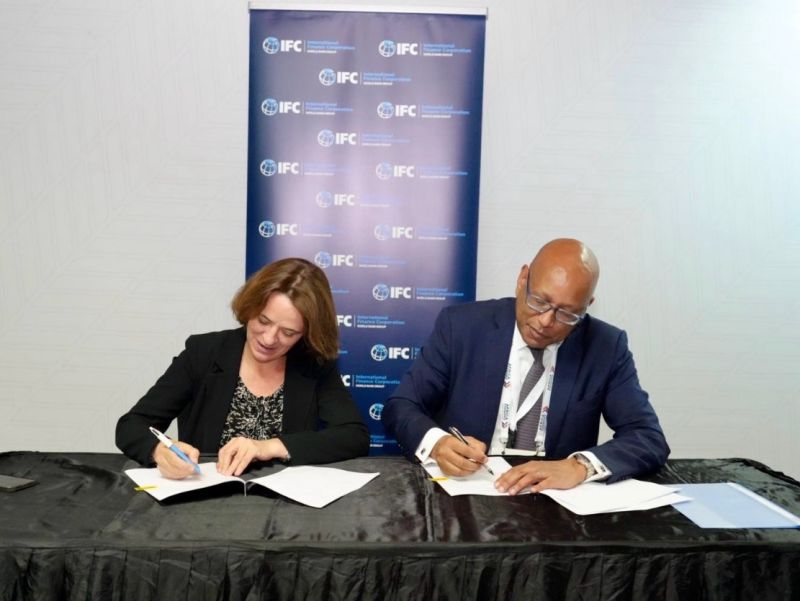
The International Finance Corporation (IFC) has signed a $40 million convertible loan agreement with EDF Power Solutions to accelerate the rollout of off-grid solar energy systems across Africa.
The agreement, announced by IFC’s Vice President for Africa Ethiopis Tafara, is designed to combine institutional financing with private capital in order to expand electricity access in underserved and rural communities.
At the core of the initiative is a pay-as-you-go solar model, which enables households and small businesses to purchase solar kits through flexible installment payments. This approach removes the high upfront cost that has traditionally limited access to renewable energy technologies.
The program also emphasizes a decentralized energy strategy, using standalone solar systems and mini-grids to provide immediate electricity access in areas where national grid expansion remains slow or economically unfeasible.
By structuring the financing as a convertible loan, the IFC aims to strengthen the long-term commercial viability of the off-grid solar sector while attracting additional private investment into Africa’s clean energy market.
The initiative comes at a time when the continent continues to face a significant electricity access gap. An estimated 600 million people across Africa—particularly in sub-Saharan regions—still lack reliable access to electricity, limiting economic development and access to essential services.
Rapid population growth and urbanization have further strained existing power infrastructure, leaving many national utilities under financial and operational pressure. As a result, development institutions are increasingly turning to decentralized renewable energy solutions as a faster and more scalable alternative.
The partnership also aligns with broader climate and development objectives aimed at reducing dependence on fossil fuels while promoting green industrialization across emerging markets.
The funding is closely tied to the World Bank Group and African Development Bank-backed Mission 300 initiative, which seeks to connect 300 million people in Africa to electricity by 2030.
Through programs like this, global financial institutions are working to mobilize billions of dollars in private-sector renewable energy investment while supporting policy reforms that expand access to clean, affordable, and reliable power across the continent.
Source: Omanghana