Omanghana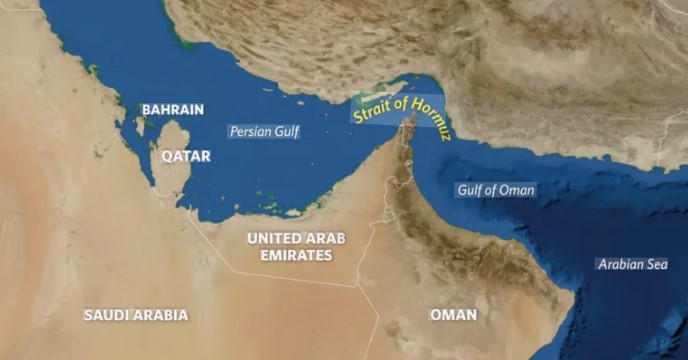
Iran is moving to expand its influence over global digital infrastructure by seeking greater control over critical undersea fiber-optic internet cables passing beneath the Strait of Hormuz.
The proposal comes amid heightened regional tensions during the ongoing 2026 conflict involving a U.S.-led coalition, with Tehran increasingly framing the strategic waterway as both a military and economic leverage point. Iranian lawmakers and military officials have reportedly introduced plans aimed at establishing regulatory and financial authority over the seabed infrastructure that supports major international internet traffic routes linking Europe, the Gulf region, and Asia.
According to officials involved in the discussions, the proposed framework would require major global technology companies—including Google, Microsoft, Meta, and Amazon—to pay licensing fees for internet traffic carried through subsea cable systems crossing the region.
Iranian authorities are also reportedly seeking exclusive rights for all maintenance and repair operations involving undersea cables located within or near Iranian territorial waters. Under the proposal, only Iranian-approved firms would be permitted to conduct repair work on the infrastructure.
Iranian state media has defended the proposal by pointing to Egypt’s management of the Suez Canal as a model for generating substantial revenue through transit and licensing fees connected to global shipping and telecommunications infrastructure.
The undersea cable network running through the Gulf region forms a critical digital backbone for international communications, cloud computing, financial transactions, and military coordination. Analysts warn that any disruption to these systems could have significant global consequences.
Although Tehran has not openly threatened direct sabotage, Iranian state-affiliated media and military-linked commentators have issued warnings suggesting internet traffic through the region could face disruptions if international firms refuse to comply with the proposed framework.
Security experts note that two major subsea cable systems—Falcon and Gulf Bridge International (GBI)—pass through Iranian territorial waters. Analysts also point to the capabilities of the Islamic Revolutionary Guard Corps (IRGC), which possesses underwater drones, mini-submarines, and specialized naval units capable of operating near subsea infrastructure.
Experts caution that any physical disruption to these cables could trigger widespread consequences across global banking systems, military communications, AI cloud infrastructure, and cross-border financial operations between Europe and Asia. Countries heavily dependent on digital outsourcing and international data connectivity, including India, could also face major economic losses.
Despite the aggressive rhetoric surrounding the proposal, maritime law specialists and telecom analysts argue that Tehran faces substantial legal and economic barriers to implementing such measures. Unlike the land-controlled Suez Canal, the Strait of Hormuz is governed by international maritime transit passage laws, limiting Iran’s ability to assert unilateral authority over international seabed infrastructure.
Analysts further note that existing U.S. sanctions would likely prevent American technology firms from legally transferring licensing payments directly to Iranian entities without major diplomatic exemptions or sanctions relief agreements.
Source: Omanghana