Omanghana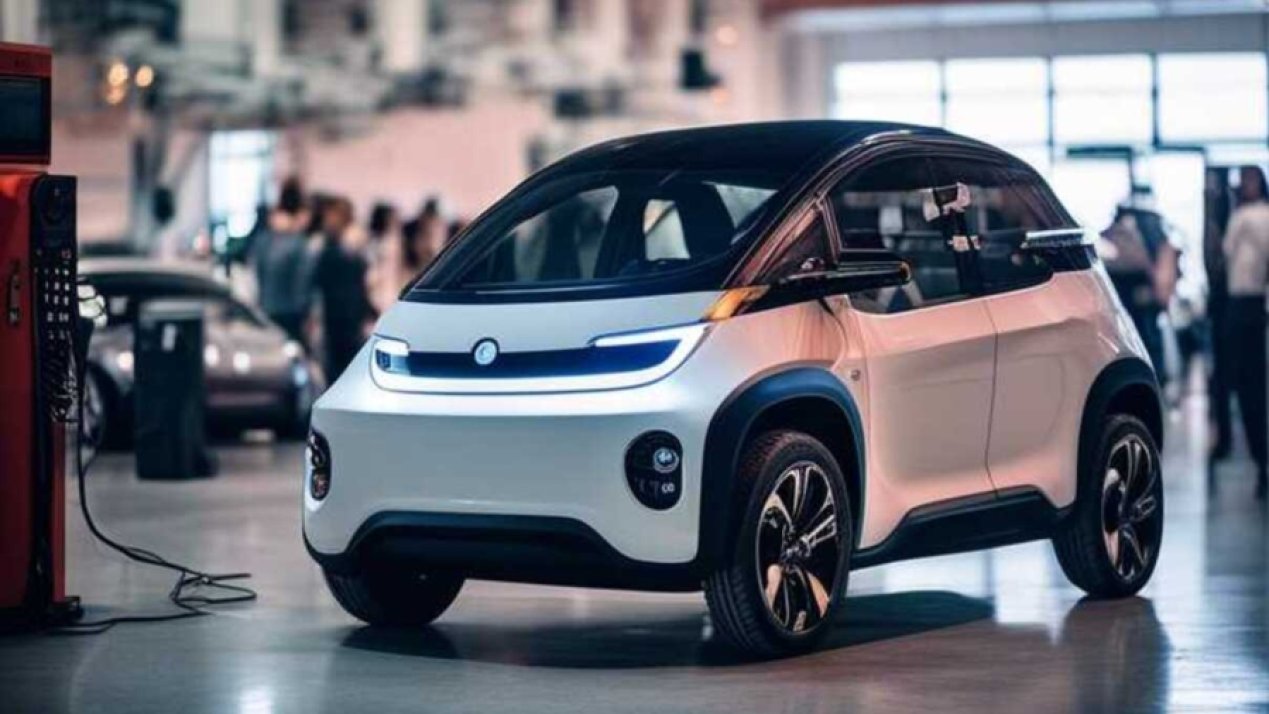
Mexico is preparing to publicly unveil its first government-backed electric mini-car prototype, known as Olinia, on June 7, 2026. The project is being promoted as a cornerstone of President Claudia Sheinbaum’s “Plan México” industrial strategy, which seeks to transform the country from a manufacturing base for foreign automakers into a developer of its own advanced automotive technologies.
The name Olinia, derived from the Indigenous Náhuatl language, translates to “to move.” The compact electric vehicle has been specifically designed for high-density urban transportation, prioritizing affordability, maneuverability, and low operating costs over long-distance highway performance.
According to project officials, the mini-car features a tall, box-shaped body structure that maximizes passenger space while allowing drivers to navigate narrow streets commonly found in Mexican cities and densely populated neighborhoods. The vehicle is capped at a maximum speed of 50 kilometers per hour, or approximately 31 miles per hour, making it particularly suitable for residential districts, town centers, and urban areas where mototaxis and small scooters are widely used.
One of the vehicle’s key advantages is its simple charging system. Unlike many modern electric vehicles that rely on specialized charging infrastructure, the Olinia can recharge fully using a standard 110-volt household power outlet. Officials say this approach is intended to expand accessibility in regions where dedicated EV charging networks remain limited.
Project director Roberto Capuano Tripp stated that the electric motor is designed with an operational lifespan of approximately eight years and is expected to cost less to maintain and operate than a conventional motorcycle. The government hopes the combination of low ownership costs and compact design will make the vehicle attractive to millions of urban commuters.
The initiative represents part of a broader strategy by the Mexican government to strengthen domestic technological innovation and reduce dependence on foreign automotive brands. Officials believe the project could position Mexico as a future leader in low-cost electric mobility solutions tailored for emerging markets.
Production models of the Olinia are expected to retail between 150,000 and 200,000 Mexican pesos, equivalent to roughly $8,600 to $11,500. The pricing strategy is aimed at making electric transportation significantly more affordable for middle- and lower-income consumers.
Following the public debut of the passenger version in June, the government plans to unveil a second prototype in July 2026 designed specifically for urban cargo transport and last-mile delivery operations. Officials say the cargo-focused model could support small businesses and e-commerce logistics within congested city environments.
Construction of large-scale manufacturing facilities is expected to begin between August and September 2026, while formal factory production is scheduled to commence in 2027. The state-backed project is currently seeking approximately $200 million in private investment to support assembly line development and industrial scaling.
Initial production targets aim for 20,000 vehicles annually before eventually increasing output to 50,000 units per year within four years. Analysts say the success of the project could mark a major milestone in Mexico’s push to establish a fully domestic electric vehicle industry capable of competing in both regional and international markets.
Source: Omanghana