Omanghana
Ghana has taken a major step toward transforming its agricultural sector with the signing of a landmark Memorandum of Understanding between the Ministry of Food and Agriculture and the Sentuo Group. The agreement, announced in April 2026, outlines a comprehensive plan to establish a domestic fertilizer manufacturing plant alongside a network of agro-processing facilities, marking a decisive move toward achieving fertilizer self-sufficiency and reducing the country’s reliance on costly imports.
At the heart of the partnership is the construction of a national fertilizer production system designed to ensure a stable and affordable supply of agricultural inputs for farmers across the country. Ghana has long depended on imported fertilizers, leaving its agricultural sector vulnerable to global price fluctuations and supply chain disruptions. By producing fertilizer locally, the government aims to stabilize input costs, improve accessibility, and protect farmers from external shocks that can undermine productivity and food security.
The agreement goes beyond fertilizer production, encompassing the development of agro-industrial hubs focused on processing key crops such as cashew, maize, rice, soybean, and oil palm. These facilities are expected to shift Ghana’s agricultural model from one centered on raw commodity exports to one driven by value addition. By processing crops domestically, the country can increase export earnings, reduce post-harvest losses, and create a more resilient agricultural value chain.
To further support farmers at the grassroots level, the Sentuo Group will establish 30 Farmer Service Centers nationwide. These centers are intended to provide technical assistance, improve access to high-quality inputs, and offer training in modern farming techniques. The initiative is expected to enhance productivity, empower smallholder farmers, and bridge gaps in agricultural extension services, which have historically been a challenge in many parts of the country.
The project will be implemented under a Public-Private Partnership model, with the Sentuo Group responsible for financing, designing, constructing, and operating the facilities. This arrangement allows the government to leverage private sector expertise and capital while maintaining strategic oversight of a critical sector. It also reflects a broader policy shift toward collaborative investment frameworks aimed at accelerating industrial and agricultural development.
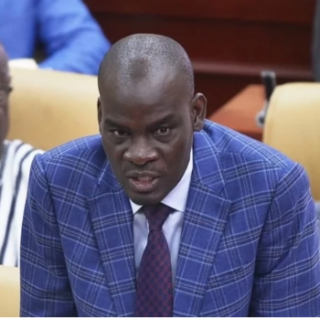
Eric Opoku подчеркнул that the initiative aligns closely with the government’s flagship programs, including the Feed Ghana Program and the “24-Hour Economy” policy. These programs are designed to modernize agriculture, boost productivity, and create continuous economic activity through industrialization and value chain development. By integrating fertilizer production with agro-processing, the government aims to create a more efficient and self-sustaining agricultural ecosystem.
The expected benefits of the partnership are far-reaching. Improved access to affordable fertilizer is projected to significantly increase crop yields, strengthening national food security and reducing dependence on food imports. At the same time, the establishment of processing facilities and service centers is expected to generate thousands of direct and indirect jobs, contributing to economic growth and reducing pressure on foreign exchange reserves by cutting import bills. Additionally, modern storage, packaging, and quality control systems introduced through the project will help minimize post-harvest losses, a persistent issue that has long affected farmers’ incomes and market efficiency.
This collaboration comes at a time when Ghana is scaling up its agricultural support programs. In 2026, the government is distributing approximately 272,000 metric tonnes of fertilizer to more than 661,000 farmers nationwide, underscoring its commitment to boosting agricultural productivity. The new partnership with Sentuo Group builds on these efforts, offering a long-term solution that shifts the focus from subsidy-driven support to sustainable domestic production.
As Ghana advances toward fertilizer independence and greater agricultural industrialization, the MoU represents a transformative step in redefining the sector’s future. By combining local production, value addition, and farmer support systems, the initiative positions Ghana to not only meet its domestic food needs but also emerge as a competitive player in regional agricultural markets.
Source: Omanghana