Omanghana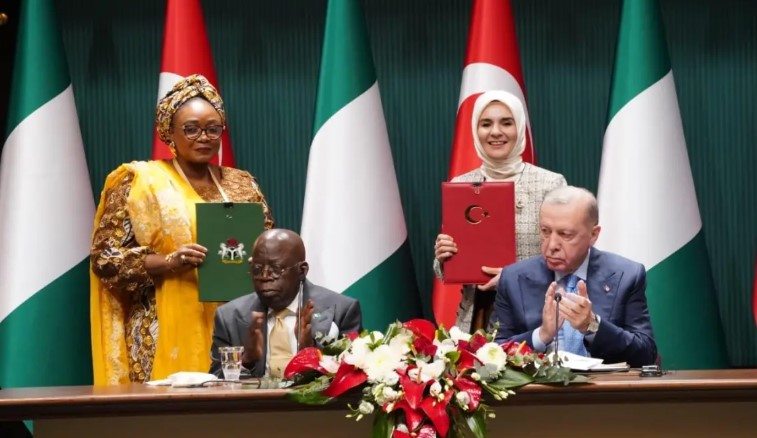
Nigeria has officially signed a major Memorandum of Understanding (MoU) with the Republic of Türkiye aimed at unlocking the country’s vast solid minerals sector, which government estimates value at nearly $750 billion in untapped resources. The agreement is expected to attract significant Turkish investment, mining technology, and technical expertise as Nigeria intensifies efforts to diversify its economy beyond oil dependence and position mining as a major pillar of national growth.
The bilateral pact was signed during the 2nd Istanbul Natural Resources Summit (INRES 2026) by Nigeria’s Minister of Solid Minerals Development, Dele Alake, and Türkiye’s Minister of Energy and Natural Resources, Alparslan Bayraktar. Officials from both countries described the agreement as a strategic expansion of an earlier 2021 cooperation framework, establishing a broader roadmap for technology transfer, exploration partnerships, and commercial mining ventures.
Under the new arrangement, Nigeria plans to leverage Türkiye’s advanced mining machinery, geological mapping systems, and exploration expertise to accelerate the discovery and development of critical mineral reserves across the country. Turkish specialists are also expected to assist in modernizing Nigeria’s mining administration by helping establish more transparent digital licensing systems and electronic databases designed to reduce corruption, improve investor confidence, and streamline approvals within the sector.
The agreement additionally introduces sustainability requirements intended to align Nigeria’s mining industry with international environmental standards. Authorities say the partnership will promote lower industrial carbon emissions, more efficient water usage, and stronger protections for communities affected by extraction activities. Joint public-private ventures between Turkish investors and Nigerian state-backed mining entities are also expected to play a central role in financing and operating future extraction projects.
Nigeria possesses substantial reserves of strategic minerals including lithium, copper, cobalt, nickel, coltan, and rare earth elements, all of which are increasingly critical to global clean energy technologies, electric vehicle batteries, and advanced electronics manufacturing. Government officials believe closer cooperation with Türkiye could help Nigeria move away from exporting raw mineral ores toward domestic refining, processing, and value addition, allowing the country to capture significantly greater economic benefits from its natural resources.
The initiative reflects a broader shift taking place across Africa, where governments are increasingly tightening regulations on extractive industries and demanding that more refining and industrial processing occur locally before resources are exported abroad. Nigerian authorities have simultaneously intensified crackdowns on illegal mining operations while introducing reforms aimed at improving the ease of doing business and attracting long-term foreign investment into the formal mining economy.
Despite the optimism surrounding the deal, domestic analysts and civil society organizations have expressed caution about the long-term implications of the partnership. Some critics warn that the agreement could replicate historical extractive arrangements in which foreign corporations profited heavily from African resources while local communities were left with environmental destruction, poor infrastructure, and limited economic gains. Advocacy groups are calling for strict oversight mechanisms to ensure mining revenues are transparently managed and that affected communities receive meaningful economic benefits.
Security also remains a significant concern for investors. Several of Nigeria’s richest mineral deposits are located in remote regions facing persistent threats from armed banditry, illegal mining syndicates, and organized criminal networks. Analysts warn that without substantial improvements in local security conditions, large-scale mining operations and incoming foreign personnel could face serious operational risks.
Nonetheless, Nigerian officials insist the partnership with Türkiye represents a critical step toward transforming the country into a major global supplier of strategic minerals at a time when international demand for critical resources is rapidly expanding due to the global energy transition and the growing electric vehicle industry.
Source: Omanghana