Omanghana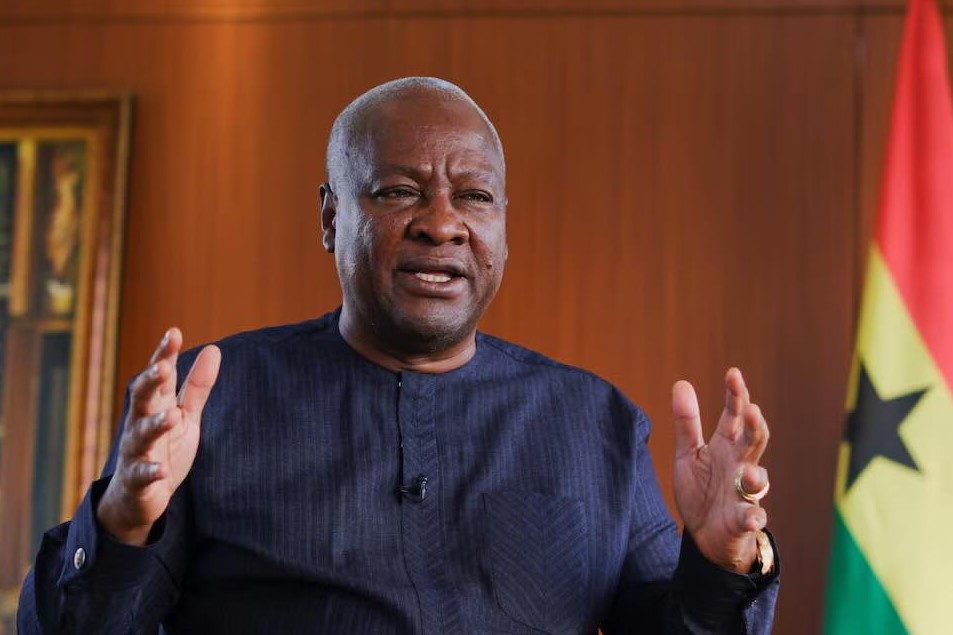
John Dramani Mahama has underscored the critical importance of Nigeria’s stability to Ghana and the wider West African region, describing it as a matter of “keen security interest.” Speaking as Special Guest of Honor at the African Heritage Awards 2026 in Accra, the President highlighted the deep interdependence between Ghana and Nigeria, warning that instability in Africa’s most populous nation could have far-reaching consequences across the subregion.
In remarks that blended humor with serious policy insight, Mahama noted that Nigeria’s population—estimated at around 250 million—means that even a small wave of outward migration triggered by instability could overwhelm neighboring countries. He remarked that he “prays every day” for Nigeria’s success, joking that it is to ensure that “one million of them don’t come drifting toward a small country like Ghana.” While the comment drew laughter from the audience, analysts interpret it as a candid reflection of real concerns about migration pressure, economic spillovers, and regional security dynamics.
Mahama emphasized that the relationship between Ghana and Nigeria goes far beyond geography, describing the two nations as “twins of the same mother.” He pointed to shared historical and cultural roots, including the fact that many Ghanaians trace their ancestry to Yoruba kingdoms in present-day Nigeria. According to him, the only consistent areas of rivalry between the two countries tend to revolve around lighthearted issues such as football and the long-running debate over which nation makes the best jollof rice. Beneath these cultural exchanges, however, lies a deep and enduring partnership that has shaped economic cooperation and regional integration for decades.
The President’s comments come at a sensitive moment, following the circulation of outdated videos on social media that had sparked concerns about xenophobia and the safety of Nigerian nationals in Ghana. In response, Mahama moved quickly to reassure both domestic and international audiences. He confirmed that there are no plans for mass deportations of Nigerians and reiterated Ghana’s commitment to the protocols of the Economic Community of West African States, which guarantee the free movement of people within the region.
As part of efforts to ease tensions, Mahama held discussions with a special envoy from Bola Tinubu, represented by Bianca Odumegwu-Ojukwu, Nigeria’s Minister of State for Foreign Affairs. During the meeting, he assured the Nigerian government that recent protests in Ghana were isolated incidents involving fewer than 50 individuals and did not reflect broader public sentiment. He reaffirmed that Ghana remains a welcoming and inclusive society committed to peaceful coexistence.
Looking ahead, both countries are exploring ways to institutionalize their cooperation through the establishment of a permanent Ghana–Nigeria Joint Commission. This platform is expected to address shared challenges such as youth migration, trade facilitation, and subregional integration, while strengthening diplomatic ties and fostering coordinated responses to emerging issues.
Mahama’s remarks highlight a broader reality in West Africa: the stability of one major economy can have profound implications for its neighbors. As Ghana and Nigeria continue to navigate shared challenges and opportunities, their relationship remains a cornerstone of regional cooperation, underscoring the importance of unity, dialogue, and mutual support in advancing peace and development across the continent.
Source: Omanghana