Omanghana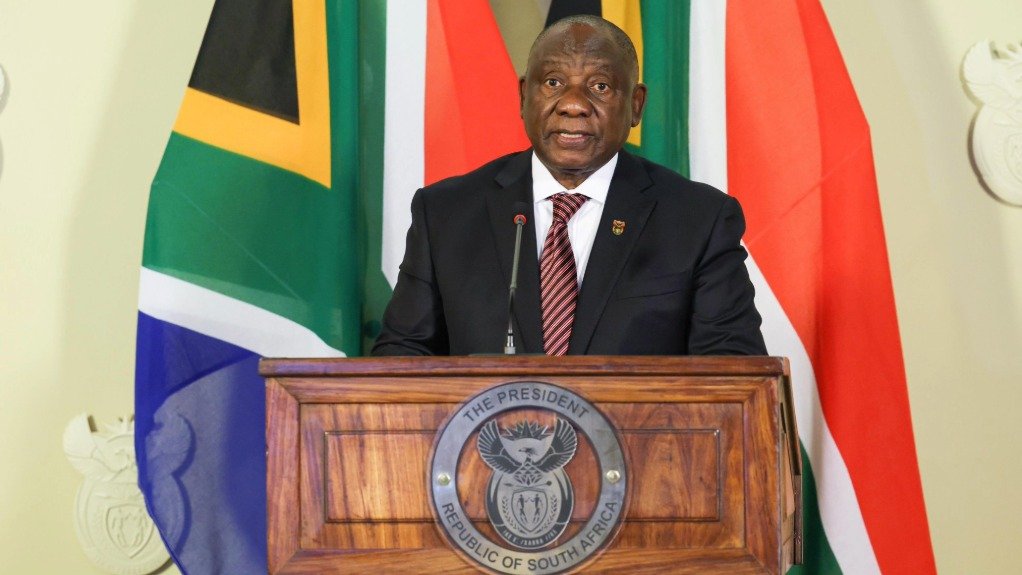
South African President Cyril Ramaphosa has reaffirmed his government’s commitment to enforcing immigration and labor laws, declaring that all foreign nationals living, working, or operating businesses in South Africa must comply fully with the country’s legal requirements.
The President’s remarks come amid heightened tensions over immigration, rising anti-immigrant demonstrations, and growing regional concern over the safety of foreign nationals residing in South Africa.
While strongly condemning incidents of mob violence, intimidation, and looting targeting migrants, Ramaphosa emphasized that the government has a constitutional responsibility to maintain border security, uphold the rule of law, and ensure compliance with national regulations.
Government Tightens Border Security Operations
Addressing concerns over illegal migration and document fraud, Ramaphosa stressed that South Africa remains open to tourists, investors, refugees, and individuals who enter and reside in the country legally.
However, he indicated that authorities are intensifying efforts to combat undocumented migration and strengthen border management systems.
A central role in this strategy is being played by the Border Management Authority (BMA), which has expanded enforcement operations at major entry points across the country.
Among the key areas of focus is the busy Beitbridge border crossing between South Africa and Zimbabwe, where immigration and security officials have increased inspections and monitoring activities.
Authorities have also expanded operations aimed at identifying undocumented migrants, with enforcement teams conducting verification exercises and immigration compliance checks in various parts of the country.
Business Compliance Audits Intensify
The government’s enforcement campaign extends beyond border controls and into the business sector.
Officials have launched extensive compliance inspections targeting businesses operating in townships and informal commercial districts, including thousands of spaza shops and small retail establishments.
Multi-agency teams composed of law enforcement personnel, health inspectors, and regulatory officials are reviewing business registrations, operating permits, tax compliance documentation, and consumer protection standards.
Authorities say the inspections are intended to ensure that businesses operate legally and meet health and safety requirements while preventing the sale of counterfeit or expired products.
Government officials have warned that businesses found operating without the required licenses or legal registrations could face closure, financial penalties, and possible criminal proceedings.
Labor Department Targets Undocumented Employment
The Department of Employment and Labor has also intensified workplace inspections in sectors historically associated with informal labor practices.
Industries under increased scrutiny include agriculture, hospitality, construction, transportation, and logistics.
Inspectors are conducting unannounced visits to verify employment records and ensure that workers possess the necessary legal documentation to work in South Africa.
Under existing labor regulations, employers found to be hiring undocumented workers may face significant penalties and enforcement action.
Government officials argue that stricter compliance measures are necessary to protect labor standards and address concerns surrounding unemployment and fair competition in the job market.
Balancing Enforcement and Protection
Ramaphosa’s administration has repeatedly emphasized that immigration enforcement must be carried out within the framework of the law and without discrimination.
The President has condemned acts of vigilantism and warned that individuals involved in violence, looting, intimidation, or unlawful actions against foreign nationals will face prosecution.
Government leaders have maintained that concerns regarding migration should be addressed through legal institutions and policy reforms rather than through community-led enforcement actions.
Regional Tensions and Diplomatic Challenges
The tougher enforcement posture comes at a time of growing diplomatic sensitivity across the African continent.
Several neighboring countries, including Ghana, Nigeria, and Mozambique, have expressed concern over the safety of their citizens in South Africa amid recent unrest and security incidents.
Some governments have initiated repatriation programs for citizens seeking to return home, while regional leaders continue discussions on migration, security cooperation, and the protection of foreign nationals.
Despite these diplomatic pressures, Ramaphosa has maintained that South Africa will continue to enforce its immigration laws while simultaneously ensuring that all residents—regardless of nationality—are protected from violence and unlawful targeting.
A Delicate Balancing Act
As South Africa grapples with immigration challenges, economic pressures, and public concerns over employment, the government faces the difficult task of balancing stronger enforcement measures with its commitments to human rights, regional cooperation, and continental solidarity.
The coming months are expected to test the effectiveness of the government’s strategy as authorities seek to restore public confidence, strengthen legal compliance, and prevent further tensions from escalating into broader regional disputes.
Source: Omanghana