Omanghana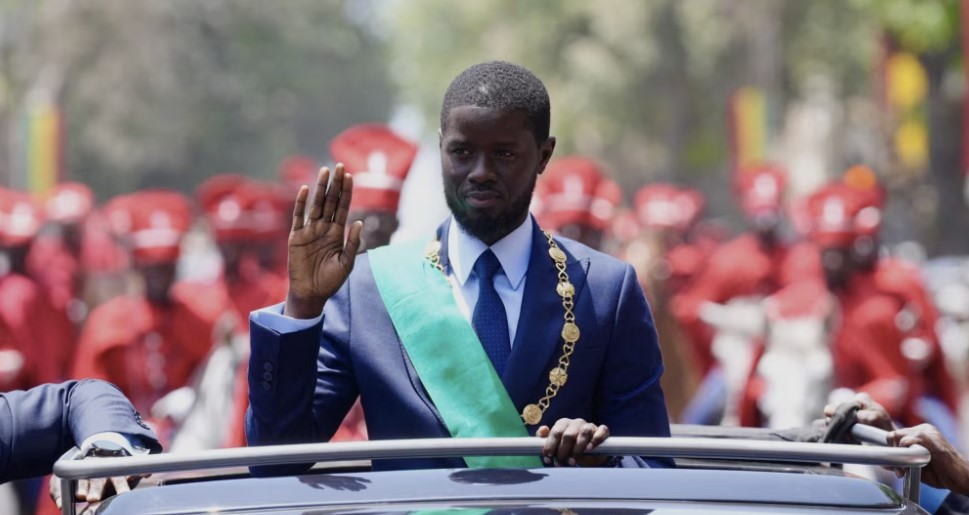
Senegalese President Bassirou Diomaye Faye has called on the international community to move beyond rhetoric and take concrete steps to implement the United Nations’ landmark resolution on reparatory justice for the transatlantic slave trade and chattel enslavement.
Speaking on Thursday, June 18, 2026, during the High-Level Consultative Conference on “Next Steps” in Accra, Ghana, President Faye stressed that meaningful progress would require coordinated action, institutional commitment, and sustained political will rather than symbolic declarations.
The conference brought together African leaders, policymakers, legal experts, and civil society representatives in the wake of the United Nations General Assembly’s adoption of Resolution A/RES/80/250 in March 2026, the first UN resolution dedicated entirely to addressing the legacy of the transatlantic slave trade and enslavement.
From Promises to Practical Implementation
In his address, President Faye emphasized that the adoption of the UN resolution should mark the beginning—not the culmination—of international efforts toward reparatory justice.
He argued that governments, multilateral organizations, and civil society groups must work together to establish structured mechanisms capable of translating commitments into measurable outcomes.
According to the Senegalese leader, the period leading up to the UN Secretary-General’s first formal progress report represents a critical opportunity for the global community to demonstrate its commitment through concrete initiatives rather than expressions of support alone.
New Panels Launched to Drive Progress
To advance the reparations agenda, Ghanaian President John Dramani Mahama, serving as the African Union’s Official Champion on Reparations, announced the establishment of three key international bodies aimed at supporting implementation efforts.
The newly unveiled Global Advisory Panel on Reparatory Justice will provide strategic direction through the involvement of heads of state and distinguished public figures.
A Global Legal Panel on Reparatory Justice has also been created to examine legal pathways and international frameworks that could support formal reparations claims and policy development.
In addition, an Expert Panel on the Restitution of Cultural Artefacts will focus on facilitating the return of African cultural treasures and historical objects removed during periods of colonial rule and conflict.
Reparations Beyond Financial Compensation
Leaders attending the summit emphasized that reparatory justice extends beyond monetary payments and should encompass broader efforts to address the enduring consequences of slavery and colonialism.
The approach aligns with the African Union’s Decade of Reparations (2026–2036), which seeks to promote comprehensive measures including economic reform, educational initiatives, cultural restoration, and historical accountability.
Participants highlighted the importance of tackling structural inequalities, addressing systemic discrimination, and promoting fairer global economic relationships rooted in mutual respect and equity.
The conference also underscored the value of truth-telling initiatives, official acknowledgments of historical injustices, and educational programs designed to preserve the history and legacy of the transatlantic slave trade for future generations.
Symbolic Setting Reinforces the Message
The summit’s concluding sessions are scheduled to take place at Christiansborg Castle in Osu, a historic site closely associated with the transatlantic slave trade. Once a major coastal trading fort, the castle has become a powerful symbol of remembrance and reflection on one of history’s darkest chapters.
Organizers said the venue serves as a reminder of the human cost of slavery while reinforcing the conference’s broader objective of moving from historical recognition to meaningful action.
Renewed Momentum for a Global Conversation
President Faye’s remarks add to growing calls across Africa and the African diaspora for renewed international engagement on reparatory justice. Supporters argue that implementing the UN resolution presents an opportunity to foster dialogue, strengthen historical understanding, and develop policies that address the long-term social and economic impacts of slavery and colonial exploitation.
As discussions continue, leaders at the Accra summit expressed hope that coordinated global efforts will transform recent diplomatic milestones into lasting initiatives capable of advancing justice, reconciliation, and shared development.
Source: Omanghana