Omanghana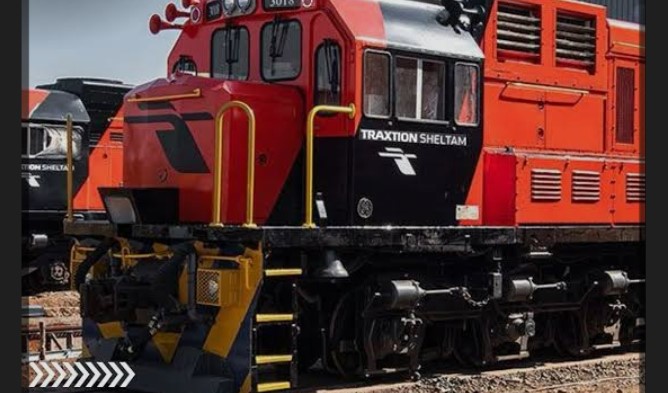
Transnet has officially approved 11 private freight operators to access South Africa’s national rail network in what is being described as the country’s most significant rail reform in more than a century.
The landmark operating agreements, finalized on May 13, 2026, are designed to dismantle the long-standing state monopoly over freight rail services and revive a logistics system that has suffered years of infrastructure deterioration, operational inefficiencies, and export bottlenecks.
The reforms are expected to play a major role in restoring freight capacity for Africa’s most industrialized economy, particularly in the mining and export sectors that have faced mounting losses due to rail congestion and declining network reliability.
Out of 25 original applicants, Transnet approved 11 specialized operators to participate in the new open-access rail framework.
Among the successful companies is Grindrod, one of South Africa’s largest logistics and shipping firms listed on the Johannesburg Stock Exchange.
TLD Marine secured approval through a strategic partnership with MSC, the Geneva-based global container shipping giant.
Other approved firms include Menar Ports & Rail, ARC South Africa, Minrail, Barberry, The Railway Corporation, Sharp Logistics, Iracema, Motheo Logistics, and Interlinks.
Under the new framework, private operators will receive regulated slot access to 41 rail routes spanning five strategic freight corridors. These corridors connect key mining zones, industrial fuel hubs, and inland cargo centers to South Africa’s major shipping ports.
The operations will focus primarily on high-volume freight categories such as coal, manganese, chrome, fuel, containers, and general cargo.
Transnet estimates that the immediate rollout of private rail access could add approximately 24 million metric tons of freight capacity to the network. Over the next five years, the company projects that this could expand to as much as 52 million tons.
The broader national target is to increase South Africa’s annual rail freight volumes from the current level of roughly 180 million metric tons to 250 million metric tons by 2030.
Several of the approved operators are expected to begin running freight services on the network during the second half of 2026.
To support the transition and reduce the financial burden on new operators, Transnet is simultaneously establishing a rolling stock leasing company known as LeaseCo. Structured as a public-private partnership, the initiative will make locomotives and wagons available for lease instead of requiring operators to purchase equipment outright.
Transnet has already earmarked 500 locomotives and 17,000 wagons that will be accessible to domestic and regional freight operators participating in the open-access system.
Despite strong investor enthusiasm surrounding the reforms, the liberalization process has already sparked political and commercial resistance.
Several local business groups, including the Guma Group and the Black Business Council, have challenged Transnet’s procurement strategy. The groups argue that sourcing rail infrastructure supplies directly from foreign original equipment manufacturers in countries such as China, France, Japan, and the United Kingdom risks excluding local black-owned enterprises from major economic opportunities.
Meanwhile, the opposition Democratic Alliance (DA) has criticized the reforms as insufficient. The party has formally petitioned Transport Minister Barbara Creecy, arguing that allowing private trains to operate on state-managed rail lines without privatizing track maintenance and management will not fully resolve the network’s structural problems.
The DA is advocating for broader concession agreements that would transfer operational control and maintenance responsibilities for rail infrastructure to private entities as part of a deeper overhaul of South Africa’s freight logistics system.
Source: Omanghana