Omanghana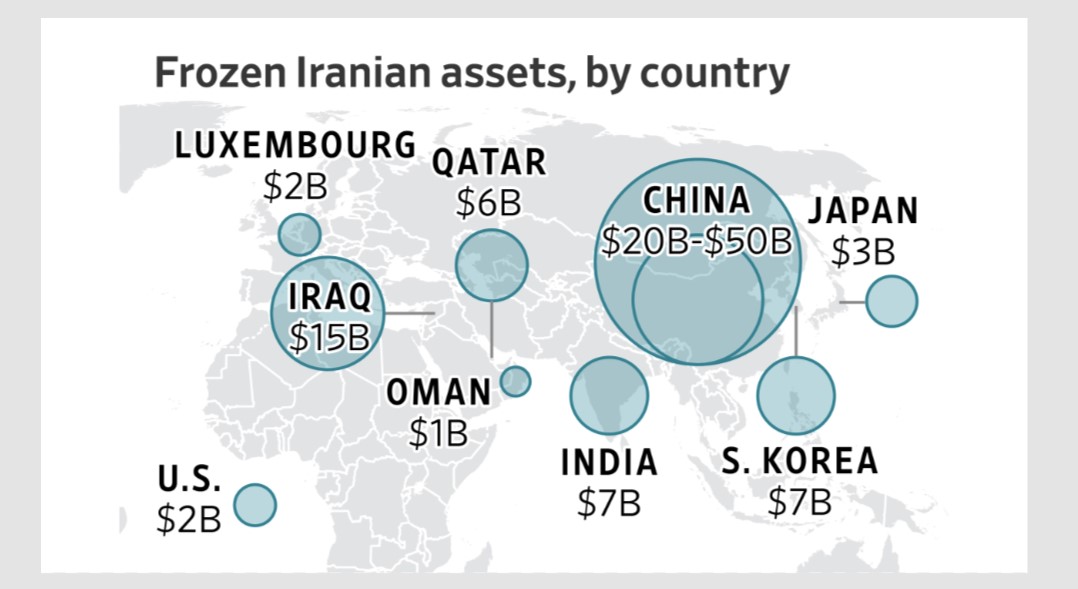
photo by WSJ
Iran is estimated to have between $100 billion and $120 billion in assets held abroad under various restrictions, with much of the money tied up in escrow accounts and banking arrangements across major oil-importing countries. The funds largely stem from oil, natural gas, and electricity sales but remain subject to sanctions and financial controls that limit Tehran’s ability to access or transfer them freely.
As international discussions continue over the potential phased release of some of these assets, attention has focused on where the funds are located and the conditions governing their use.
China Holds the Largest Share
China is believed to account for the largest portion of Iran’s overseas holdings, with estimates ranging from $20 billion to $50 billion derived primarily from crude oil exports.
While these funds are generally described as restricted rather than formally frozen under Western sanctions, access remains limited. In practice, Iran has often been able to use the money mainly for purchases of Chinese goods and services, including industrial equipment, machinery, automobile components, and consumer products.
Iraq Maintains Escrow Accounts for Energy Payments
An estimated $15 billion linked to Iranian natural gas and electricity exports is reportedly held in escrow accounts at the Trade Bank of Iraq.
Because of U.S. sanctions and financial regulations, Iraqi authorities face significant restrictions on transferring these funds directly to Tehran. Instead, mechanisms involving humanitarian transactions or third-party arrangements have been used to facilitate limited access under approved conditions.
India Continues to Hold Oil-Related Funds
India is estimated to hold approximately $7 billion from historical crude oil purchases made before sanctions tightened.
After the United States withdrew from the Iran nuclear agreement in 2018 and reinstated sanctions, Indian financial institutions were required to halt payments associated with Iranian oil imports, leaving substantial balances within local banking channels.
Additional Holdings Around the World
Several other countries also hold Iranian assets under varying restrictions:
- Qatar: Approximately $6 billion in funds originally transferred from South Korea as part of a 2023 prisoner exchange arrangement. The money was designated for humanitarian purposes but has remained subject to strict oversight and limitations.
- Japan: Roughly $3 billion linked to legacy oil sales remains in Japanese financial institutions following Tokyo’s suspension of Iranian oil imports.
- Europe and the United States: An estimated $4 billion is believed to be held across European financial systems and frozen assets in the United States. These include funds and property affected by longstanding sanctions and legal measures dating back several decades.
Why the Funds Remain Restricted
Much of Iran’s international energy trade has historically been conducted in U.S. dollars or through financial institutions connected to the global dollar-clearing system. As a result, sanctions imposed by the United States and other jurisdictions have significantly constrained the movement of Iranian funds held overseas.
Rather than permitting unrestricted transfers, many of the accounts operate under escrow arrangements or are subject to conditions that limit their use to approved transactions, such as humanitarian purchases or imports from the host country.
Ongoing Diplomatic Focus
The future of Iran’s overseas assets remains closely tied to diplomatic negotiations and sanctions policy. Any agreement to release or expand access to the funds would likely require coordination among multiple governments, financial institutions, and regulatory authorities.
For now, billions of dollars in Iranian revenues remain immobilized or tightly controlled in banking systems around the world, reflecting the continuing intersection of international finance, sanctions enforcement, and geopolitical negotiations.
Source: Omanghana