Omanghana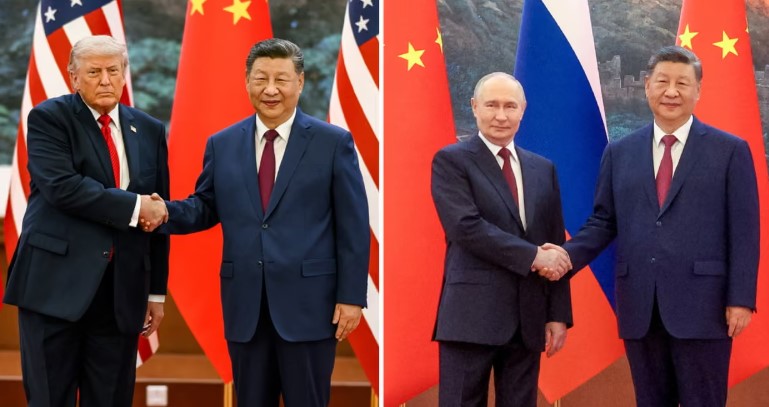
The back-to-back state visits by Donald Trump and Vladimir Putin to China may have appeared visually similar on the surface, but political analysts say the underlying objectives, diplomatic tone, and strategic outcomes were dramatically different.
According to analysts from advisory groups including The Asia Group and Teneo, Beijing deliberately used the rapid succession of the two high-profile meetings to reinforce its position as a central force in global diplomacy and geopolitical power balancing.
At the center of both visits stood Xi Jinping, whose interactions with Trump and Putin highlighted China’s evolving relationships with both Washington and Moscow.
Although both leaders received high-level ceremonial treatment in Beijing, the strategic focus of each visit differed significantly.
Trump’s May 13–15, 2026 visit largely centered on stabilizing the increasingly volatile relationship between the world’s two largest economies. Discussions reportedly focused on tariff disputes, agricultural trade commitments, and ongoing geopolitical tensions in the Middle East.
The outcome of Trump’s meetings was largely incremental, resulting in verbal commitments toward “constructive strategic stability” but producing no major binding agreements or formal treaties.
Putin’s May 19–20 visit, by contrast, focused on deepening the long-term strategic partnership between China and Russia. Talks emphasized energy cooperation, oil and gas infrastructure expansion, and broader coordination around building what both sides described as a “multipolar world order.”
Unlike Trump’s visit, Putin’s trip concluded with a sweeping 47-page joint declaration alongside more than 20 bilateral agreements.
Analysts say Beijing carefully customized its diplomatic approach based on each leader’s political style and psychological preferences.
According to George Chen of The Asia Group, Chinese officials emphasized ceremonial prestige during Trump’s stay, understanding the former U.S. president’s preference for visible displays of status and grandeur.
Xi reportedly granted Trump access to exclusive locations such as the Zhongnanhai imperial gardens — a rare diplomatic gesture designed to showcase respect and elevate the optics of the visit.
The meetings, however, remained highly controlled. Notably, Xi declined to hold a joint press conference alongside Trump, signaling continued caution and underlying strategic distrust between the two powers.
With Putin, the atmosphere appeared noticeably more relaxed and substantive.
Rather than emphasizing ceremonial symbolism, Xi and Putin focused heavily on long-term strategic coordination, economic cooperation, and reaffirmation of their “no-limits” partnership.
The two leaders held a more open joint press conference and reportedly shared extended private discussions over tea, reinforcing perceptions of deeper personal and political alignment.
Analysts also noted stark differences in the language Xi used when addressing each relationship.
During Trump’s visit, Xi cautiously encouraged the United States to treat China as a “partner rather than a rival,” an apparent effort to reduce tensions amid ongoing trade and geopolitical disputes.
The messaging reflected Beijing’s desire to manage strategic competition with Washington while avoiding further economic escalation.
In contrast, Xi adopted far stronger rhetoric during meetings with Putin.
The Chinese leader praised the “unyielding ties” between Beijing and Moscow while openly criticizing what both governments describe as Western dominance and unilateralism.
Analysts interpret the messaging as part of China’s broader effort to position Russia as a strategic counterbalance to U.S.-led global influence.
Former diplomats and intelligence analysts say the sequence of the two visits also revealed shifting power dynamics within the China-Russia relationship itself.
Putin’s latest trip marked his 25th visit to China, underscoring Moscow’s growing economic dependence on Beijing as Russia continues to navigate sanctions and geopolitical isolation linked to its ongoing war efforts.
While Russia continues to project military power globally, analysts increasingly view China as the dominant partner within the Beijing-Moscow alliance.
Some observers argue that Xi now occupies the role of the “big brother” in the relationship, with Russia relying heavily on Chinese economic support, trade access, and energy cooperation.
By hosting Trump immediately before Putin, Beijing also managed to send a broader geopolitical message.
Analysts say the carefully staged diplomatic sequence allowed China to present itself as a global power capable of engaging both the United States and Russia from a position of confidence and equal standing.
The dual summits reinforced Beijing’s ambition to position itself not merely as a regional power, but as a central architect of an emerging global order increasingly defined by strategic competition, shifting alliances, and multipolar diplomacy.
Source: Omanghana