Omanghana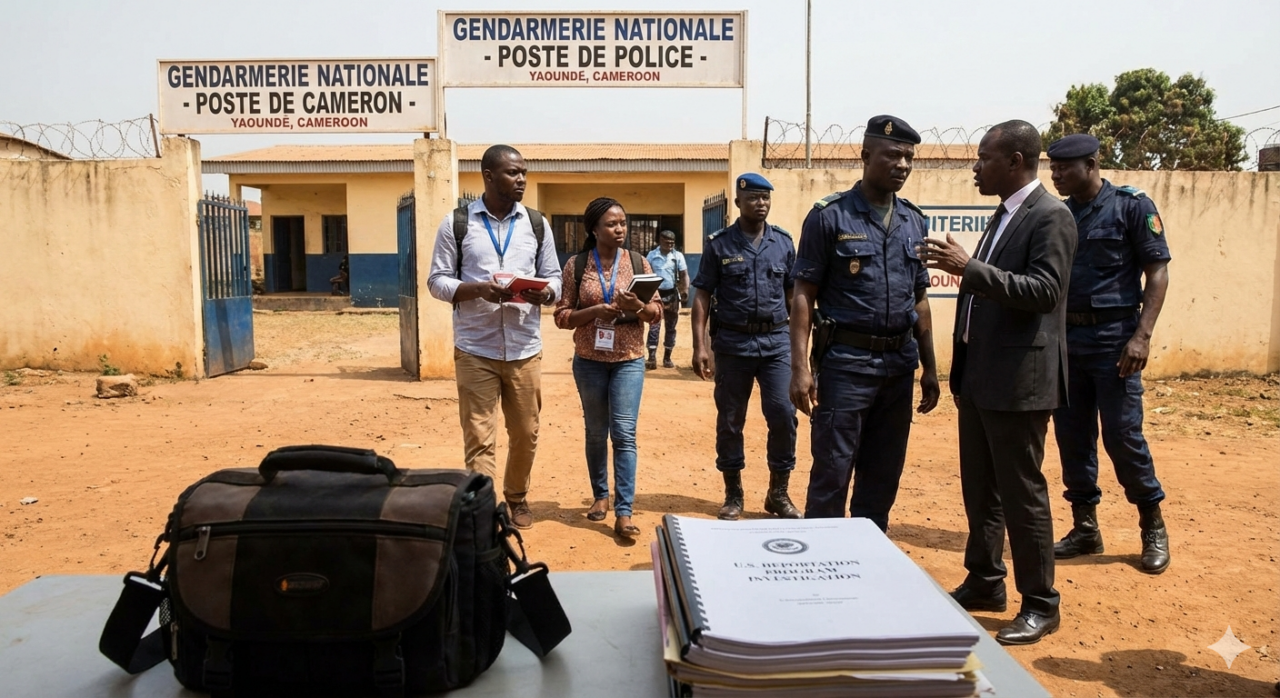
Four journalists and a lawyer were detained for several hours in Yaoundé, Cameroon, while investigating a little-known deportation initiative linked to the Trump administration. The program reportedly involves the transfer of non-Cameroonian African migrants from the United States to Cameroon, raising serious legal and human rights concerns.
Who Was Detained
The detained group consisted of:
-
Three Cameroon-based journalists working on an assignment for the Associated Press (AP)
-
Randy Joe Sa’ah, a freelance journalist who has previously contributed to the BBC and Reuters
-
Joseph Awah Fru, a Cameroonian lawyer representing approximately 15 African migrants deported from the United States
Detention at State Facility
The group was seized by security forces at a state-run compound in Yaoundé, where they were attempting to interview deported migrants and film the premises. According to accounts provided by those involved, police accused the journalists of unauthorized reporting and filming in a restricted area.
During the detention, one AP reporter was reportedly slapped and beaten by police officers, while the others were subjected to questioning and intimidation. All five individuals were later transported to the judicial police headquarters, where they were held for roughly five hours before being released without charge.
Equipment Seized
Authorities confiscated the journalists’ mobile phones, cameras, and laptops, claiming the devices contained what officials described as “sensitive government information.” At the time of their release, it was unclear whether all seized equipment had been returned or if any material had been copied or retained by security services.
Investigating a “Third-Country Deportation” Scheme
The journalists were investigating a controversial third-country deportation arrangement under which the United States deports migrants to countries other than their nations of origin. The migrants being held at the Yaoundé facility were reportedly from multiple African countries, including:
-
Kenya
-
Ghana
-
Morocco
-
Zimbabwe
-
Democratic Republic of the Congo
None of the detainees was a Cameroonian citizen.
Legal and Human Rights Concerns
According to lawyer Joseph Awah Fru, many of the deported migrants hold U.S. court orders protecting them from being returned to their home countries, often due to credible fears of persecution, political violence, or other serious harm. Their relocation to Cameroon—without public disclosure or clear legal safeguards—has sparked alarm among legal experts and human rights advocates.
Critics argue that third-country deportations risk bypassing asylum protections and due process, particularly when receiving countries lack transparent agreements or oversight mechanisms.
Silence from Washington and Yaoundé
The U.S. government has not publicly confirmed the existence of a formal agreement with Cameroon permitting such transfers. The U.S. State Department has declined to comment on the matter, citing the confidentiality of diplomatic communications.
Cameroonian authorities have likewise offered limited public explanation regarding the presence of foreign deportees in state facilities or the detention of journalists investigating the issue.
Press Freedom Under Scrutiny
The detention has renewed concerns over press freedom in Cameroon, particularly when reporting intersects with sensitive national security or international migration issues. Media advocacy groups say the incident reflects a broader pattern of intimidation and restricted access for journalists working on politically sensitive investigations.
While all five individuals were eventually released, the incident underscores growing tensions between investigative journalism, migration policy, and state secrecy—both in Africa and beyond.
Source: Omanghana