Omanghana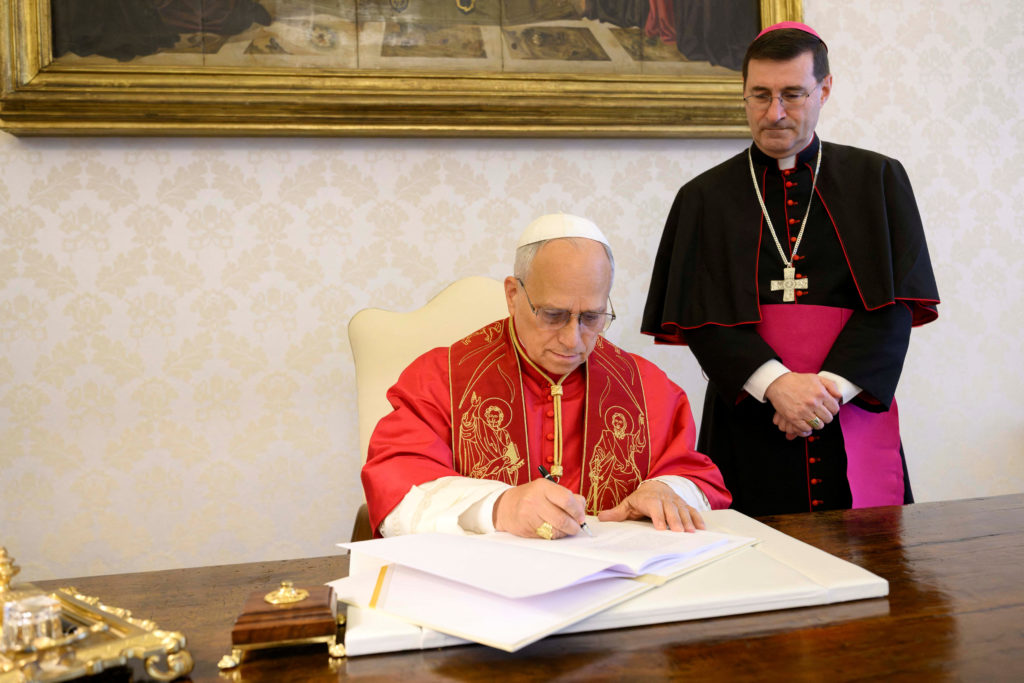
The publication of Pope Leo XIV’s first major encyclical, Magnifica Humanitas (“Magnificent Humanity”), has been described as a defining moment in modern Catholic social teaching, combining a historic institutional apology for slavery with a forceful moral warning about the unchecked development of artificial intelligence.
The document signals a major reorientation of Vatican priorities, framing technology governance and human dignity as inseparable issues in what the pontiff calls a “new moral frontier” for humanity.
Historic Apology for Slavery and Institutional Responsibility
In a striking departure from previous papal statements, Pope Leo XIV issued what is being described as the Catholic Church’s most direct institutional apology for its historical role in slavery.
While earlier popes, including St. John Paul II, had acknowledged and regretted the actions of individual Christians during the transatlantic slave trade, Leo’s encyclical goes further by addressing the responsibility of the Church as an institution.
In the text, the Pope expresses profound sorrow for centuries of suffering and human degradation, asking forgiveness “in the name of the Church” for its historical failure to fully oppose chattel slavery in earlier eras.
He also characterizes the delay in formally recognizing slavery as incompatible with Christian doctrine as a lasting “wound in Christian memory,” underscoring the long moral reckoning within the Church.
Personal and Historical Reflections
The encyclical has drawn additional attention due to references to the Pope’s personal heritage, with genealogical accounts suggesting ancestral ties that include both enslaved individuals and slaveholders within his family history.
Observers note that this background adds symbolic weight to the document’s emphasis on reconciliation, historical accountability, and moral repair.
Artificial Intelligence and “New Forms of Slavery”
A central theme of Magnifica Humanitas is the Pope’s warning that modern technological systems risk creating new forms of human exploitation.
Pope Leo XIV argues that society cannot condemn historical slavery while ignoring what he describes as emerging structures of digital domination embedded within the global tech economy.
He cautions that opaque algorithmic systems, surveillance technologies, and highly persuasive digital platforms risk reducing human beings to data points, manipulated by a small number of powerful technology companies.
The encyclical also draws attention to the human labor behind the digital ecosystem, including content moderators exposed to traumatic material and workers involved in the extraction of raw materials used in advanced computing technologies.
According to the Pope, these realities reflect an “anthropological crisis” in which economic systems risk diminishing the inherent dignity of the human person.
Call for Global Regulation of Artificial Intelligence
In one of its most consequential sections, the encyclical calls for urgent international action to regulate artificial intelligence.
Pope Leo XIV urges global leaders to “disarm” AI, warning against its use in systems of control, exclusion, or harm, and advocating for strict safeguards centered on human dignity and accountability.
The Vatican is reportedly advancing efforts toward a proposed international framework on AI governance, including dialogue with major technology firms and research institutions.
A planned summit in Rome is expected to bring together executives and researchers from leading global technology companies to discuss ethical limits and regulatory standards for emerging AI systems.
Rethinking War and Automation
The document also challenges long-standing Catholic teaching on warfare, suggesting that traditional interpretations of “just war theory” may no longer adequately address modern technological realities.
Pope Leo XIV argues that the increasing use of autonomous weapons systems undermines moral accountability by removing human judgment from life-and-death decisions on the battlefield.
He warns that fully automated warfare systems risk breaking the ethical chain of responsibility that has historically underpinned moral reasoning about conflict.
A New Moral Framework for the Digital Age
Overall, Magnifica Humanitas positions artificial intelligence, labor exploitation, and historical injustice within a single moral framework centered on human dignity.
The encyclical calls for renewed global reflection on what it means to be human in an age of rapid technological transformation, warning that societies risk becoming “less human” if economic and technological progress is pursued without ethical restraint.
With its sweeping scope, the document is already being described as one of the most consequential papal interventions in contemporary debates over technology, ethics, and global justice.
Source: Omanghana