Omanghana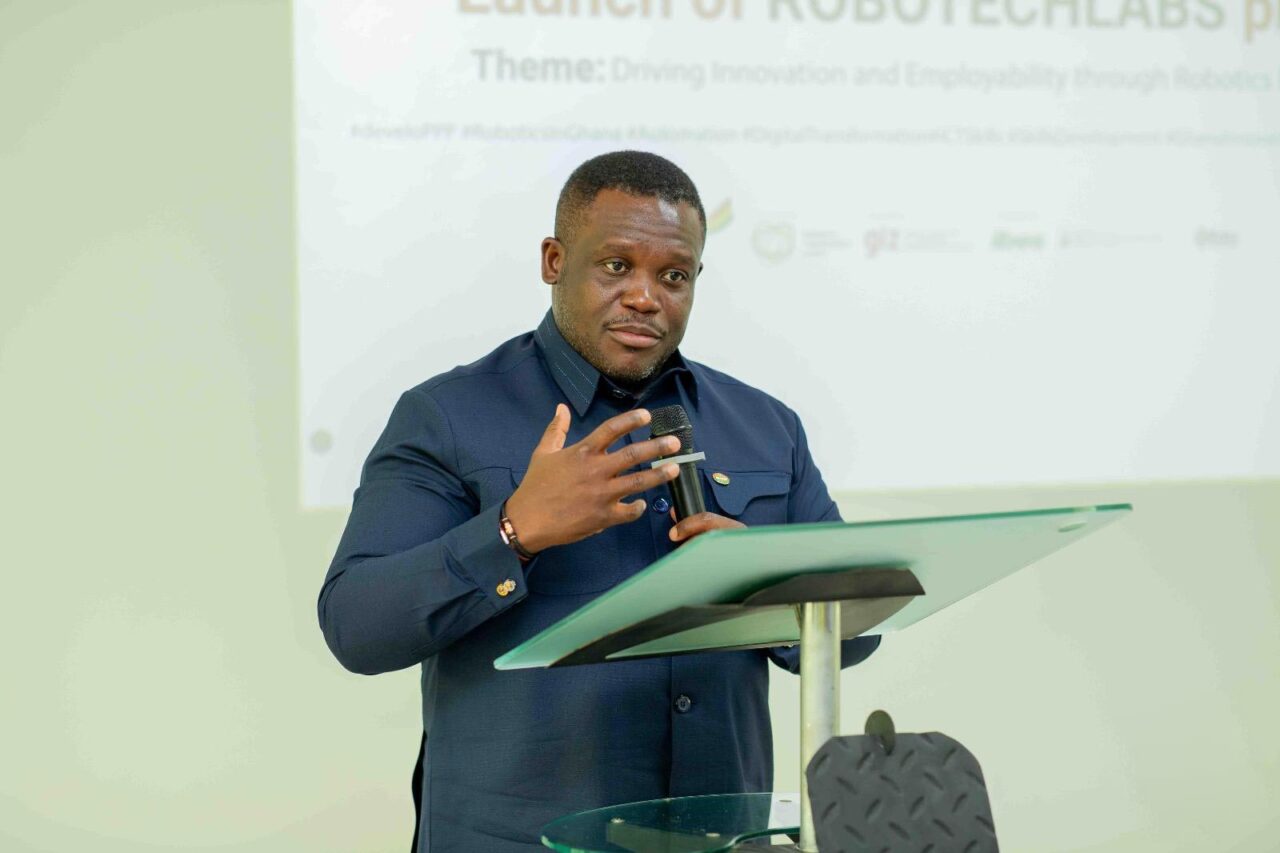
Ghana is taking significant steps to strengthen its robotics and automation ecosystem through new infrastructure investments, international partnerships, and education reforms designed to connect academic learning with real-world industrial applications. These initiatives are part of a broader national strategy to prepare the country’s workforce for the rapidly evolving global digital economy.
One of the most recent developments is the launch of RoboTechLabs at the University of Mines and Technology in Tarkwa. The facility, inaugurated on March 10, 2026, provides students and industry professionals with practical training in robotics and automation technologies. The project was developed through a collaboration involving the German Federal Ministry for Economic Cooperation and Development, GIZ Ghana, and the German engineering firm ibes AG. The goal is to offer hands-on training aligned with industry requirements, ensuring graduates possess the technical skills needed in modern industrial environments.
Further strengthening the technological infrastructure at UMaT, the Ghana Chamber of Mines broke ground in late 2025 on a $1.25 million AI Robotics and Materials Testing Laboratory. The new facility is expected to support Ghana’s extractive sector by providing advanced research capabilities in automation, robotics, and materials testing, particularly for the mining industry.
Alongside these infrastructure investments, the government is pursuing large-scale digital skills initiatives to prepare the next generation of technology professionals. One of the flagship programs is the One Million Coders Program, which seeks to equip Ghanaian youth with essential digital competencies such as coding, software engineering, and other technology-related skills needed to compete in the global technology sector.
International partnerships are also playing a key role in expanding digital education. The Ministry of Education, Ghana, has collaborated with Japan’s Life is Tech and the Ministry of Education, Culture, Sports, Science and Technology of Japan to introduce coding and digital literacy programs to approximately 1.3 million learners, primarily at the Senior High School level. The initiative aims to give students early exposure to programming and emerging technologies.
Industry participation is another central component of Ghana’s robotics and automation push. Companies and professionals from the mining, manufacturing, and digital production sectors are increasingly working with universities and technical institutions to ensure academic programs reflect the needs of modern industrial environments. This collaboration helps prepare graduates to work with industrial control systems, robotics platforms, and mining automation technologies.
Education reforms are also supporting a broader transformation in science and technology learning. Recent policies emphasize inquiry-based learning and creativity in classrooms, shifting away from traditional rote memorization methods. Teachers are being positioned as key drivers of a growing national focus on science, technology, engineering, and mathematics education.
Ghanaian students are already gaining international recognition for their technical abilities. Participants from the country recently showcased their innovation and engineering skills at the Avishkaar International Robotics Competition 2026, reflecting the growing impact of robotics and technology education nationwide.
At the foundational level, organizations such as The MakersPlace are introducing younger students to robotics, artificial intelligence, and creative engineering through hands-on learning experiences. These programs help build a pipeline of future innovators by nurturing interest in science and technology from an early age.
The growing focus on robotics and automation also aligns with Ghana’s broader economic priorities. Automation technologies are increasingly being adopted to improve productivity and safety in critical sectors such as mining, agriculture, and logistics. As these industries modernize, the demand for skilled professionals capable of designing, maintaining, and operating advanced technological systems is expected to rise.
By investing in training facilities, education programs, and international partnerships, Ghana is positioning itself to build a technologically capable workforce while strengthening innovation across key sectors of its economy.
Source: Omanghana