Omanghana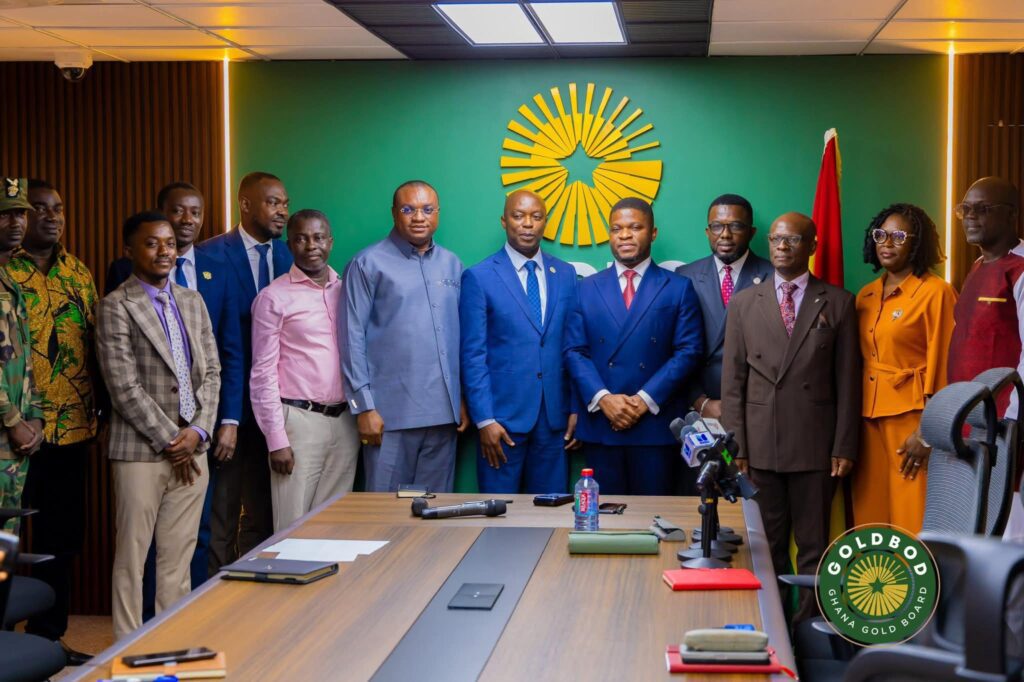
The Ghana Gold Board (GoldBod) has entered into a landmark partnership with the Ghana Armed Forces and the Forestry Commission to reclaim degraded land affected by illegal mining, commonly known as galamsey. The initiative targets large-scale environmental restoration as part of a new national rehabilitation strategy.
The agreement marks the first phase of a broader, phased nationwide Land Reclamation, Rehabilitation, and Reforestation Program, which will be fully financed by GoldBod under its Environmental, Social, and Governance (ESG) mandate.
First Phase Targets Tano Nimiri Forest Reserve
The initial intervention will focus on Compartment 161 of the Tano Nimiri Forest Reserve, a heavily degraded ecological zone that has suffered extensive damage from illegal mining activities.
According to project details, more than 200 hectares of the reserve have been severely impacted, with the first phase targeting the reclamation of 50 hectares to begin the restoration process.
Project Cost and Funding
The total estimated cost of the reclamation effort is projected to range between GH¢27.9 million and GH¢36.35 million. GoldBod will fully finance the project, underscoring its commitment to restoring environmentally damaged mining zones while maintaining responsible resource governance.
Institutional Roles in Restoration Effort
The initiative brings together multiple state institutions with clearly defined responsibilities to ensure efficient implementation:
The Ghana Armed Forces, through the Ghana Army Engineer Brigade, will oversee heavy civil engineering works. This includes reshaping degraded terrain, grading damaged surfaces, and compacting deep pits left behind by illegal mining operations.
The Forestry Commission will lead the ecological restoration phase. Under the supervision of Chief Executive Officer Hugh C.A. Brown, the commission will manage afforestation efforts, soil rehabilitation, and biodiversity recovery aimed at restoring the forest to a sustainable ecological state.
Leadership Reactions
Chief Executive Officer of GoldBod, Sammy Gyamfi, emphasized that while gold remains a vital national economic asset, its extraction must not come at the expense of environmental destruction. He noted that the selection of Tano Nimiri as the starting point signals a shift toward more responsible and sustainable resource governance.
Deputy Minister for Defense, Ernest Brogya Genfi, highlighted the importance of moving beyond enforcement alone. He stated that while anti-galamsey operations help prevent further degradation, active reclamation is necessary to repair already damaged ecosystems. He described the project as a potential national blueprint for large-scale environmental restoration.
Toward Sustainable Resource Management
The partnership between GoldBod, the military, and environmental authorities represents a coordinated approach to addressing the long-term impact of illegal mining in Ghana. Officials say the initiative is expected to set the foundation for expanded reclamation efforts across other affected forest reserves in the coming phases.
As implementation begins, stakeholders are positioning the project as a critical step toward balancing natural resource exploitation with ecological preservation and national development goals.
Source: Omanghana