Omanghana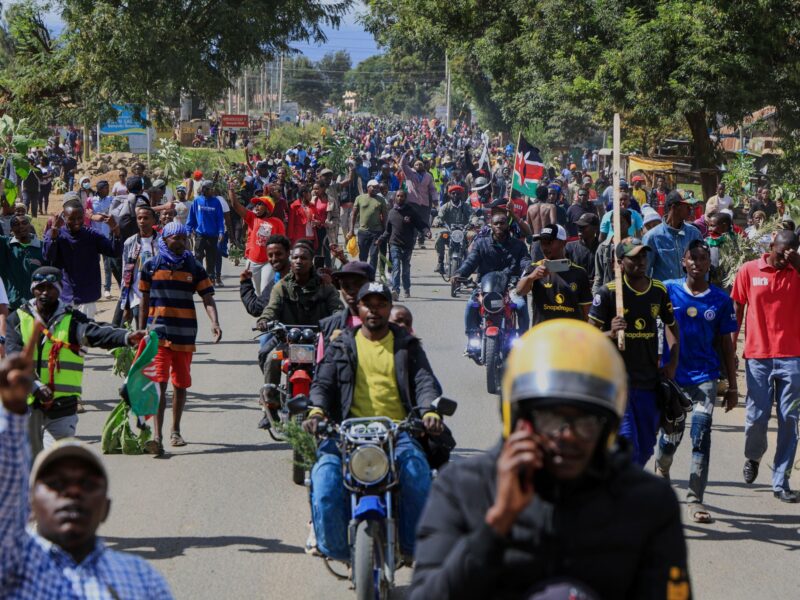
Violent protests in central Kenya have left two people dead amid growing opposition to a controversial U.S.-backed plan to establish a 50-bed Ebola quarantine and treatment facility at a military base in Laikipia County.
The unrest broke out in the town of Nanyuki after residents and civil society groups voiced strong objections to reports that the facility would be used to isolate and treat American citizens exposed to Ebola rather than transporting them back to the United States.
The proposal has sparked a heated national debate, raising concerns about public health, transparency, sovereignty, and Kenya’s role in international disease response efforts.
At the center of the dispute is an alleged policy under which the facility would exclusively serve American nationals, including medical personnel, missionaries, and aid workers potentially exposed during the ongoing Bundibugyo strain Ebola outbreak in the Democratic Republic of the Congo and Uganda.
The controversy intensified after U.S. officials signaled that Ebola patients would not be brought onto American soil for treatment. Critics argue that the strategy effectively transfers health risks to Kenya, a country that currently has no recorded Ebola cases.
Local activists have described the proposal as “Ebola dumping,” arguing that Kenya should not be expected to host a high-risk quarantine center for foreign nationals while bearing the potential consequences of any containment failures.
Public anger escalated into large-scale demonstrations as hundreds of protesters marched toward the Laikipia Air Base, where the facility is reportedly planned.
Witnesses reported that demonstrators burned tires, blocked major roads, and demanded the immediate cancellation of the project. The situation deteriorated when security forces moved to disperse the crowds.
According to protest organizers and security sources, two men were killed during the clashes after police allegedly opened fire using live ammunition. One of the victims was identified as local resident Charles Mang’aro Mwangi.
The deaths have further intensified public outrage and increased pressure on the government to address concerns surrounding the project.
The controversy has also moved into Kenya’s legal system.
Following an emergency petition filed by the Katiba Institute, High Court Judge Patricia Nyaundi extended an existing order blocking construction of the facility for an additional three weeks.
In her ruling, the judge criticized what she described as a lack of transparency surrounding the agreement and directed the government to disclose all bilateral arrangements, safety protocols, and operational details related to the project by June 9.
The court also suspended any further development of the facility pending a full hearing scheduled for June 23.
Legal experts say the ruling represents a significant challenge for the government and could shape future policies regarding international health partnerships and national security infrastructure.
Despite the court-ordered suspension, reports indicate that U.S. military aircraft have continued delivering equipment and medical personnel to the airbase.
The continued arrivals have fueled concerns among opponents of the project, who argue that construction activities may be proceeding despite the judicial injunction.
Meanwhile, U.S. officials have expressed confidence that diplomatic negotiations will ultimately resolve the dispute. Senior American health representatives have reportedly indicated that discussions with Kenyan authorities remain ongoing and that both sides are working toward a mutually acceptable arrangement.
Kenyan President William Ruto has defended the proposed project, describing it as a strategic investment that could strengthen the country’s future public health preparedness.
According to government officials, the initiative is linked to a $13.5 million U.S. assistance package intended to enhance Kenya’s biosecurity capabilities and emergency response infrastructure.
Supporters of the plan argue that the facility could improve national readiness for future disease outbreaks, while critics maintain that the government has failed to adequately consult local communities or address safety concerns.
The dispute has evolved into a major diplomatic and political challenge, placing Kenya’s government in the difficult position of balancing international cooperation with domestic public opposition.
As legal proceedings continue and protests show little sign of fading, the future of the proposed Ebola isolation facility remains uncertain, with both Kenyan and U.S. officials facing mounting pressure to provide greater transparency and reassurance to the public.
Source: Omanghana