Omanghana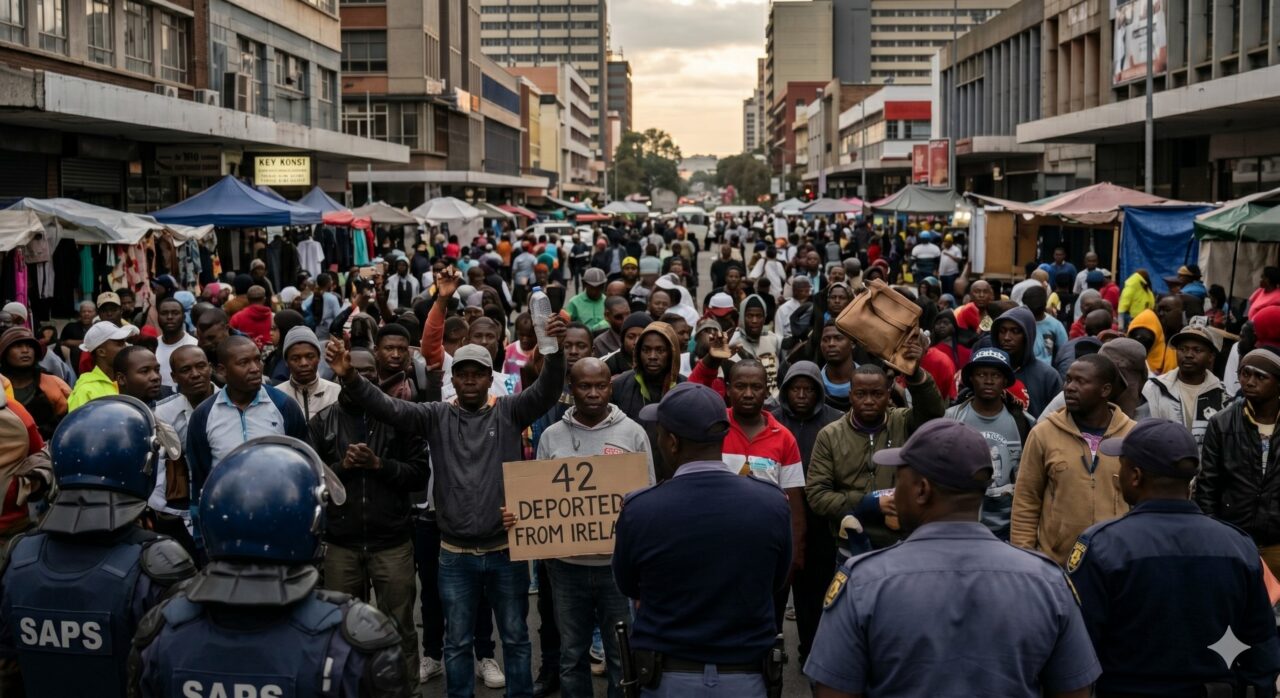
The Irish government has carried out the deportation of 42 undocumented South African nationals on a chartered flight from Dublin to Johannesburg, underscoring its increasingly stringent approach to immigration enforcement.
The operation, conducted by the Garda National Immigration Bureau on June 18, 2026, cost approximately €735,000 (about $853,000), translating to an estimated €17,500 per deportee. Irish authorities said those removed had exhausted legal avenues to remain in the country and had not accepted opportunities for voluntary return.
The deportation comes as immigration policy remains a contentious issue across Europe and coincides with ongoing migration and economic challenges in South Africa.
Charter Flight Included Families and Children
According to Irish officials, the group deported comprised 27 adults and 15 minors travelling as part of family units. Among the adults were nine men and 18 women.
Authorities also disclosed that two of the individuals on board had previous criminal convictions in Ireland, though no further details were immediately provided.
The charter flight marks Ireland’s fourth large-scale deportation operation of 2026 as the government continues to intensify immigration enforcement measures.
Ireland Expands Immigration Enforcement
The Department of Justice has significantly increased the number of deportation orders issued in recent years. More than 2,100 deportation orders have reportedly been signed in 2026, continuing an upward trend following a sharp increase recorded in 2025.
Officials say the objective is to ensure that immigration laws are consistently enforced while maintaining public confidence in the integrity of the system.
Minister for Justice Jim O’Callaghan defended the operation, emphasizing that although the overwhelming majority of South African nationals in Ireland reside legally and contribute positively to society, compliance with immigration rules remains essential.
“Our immigration system must be rules-based and robust,” the minister said, adding that the enforcement of deportation orders is a necessary component of an effective legal framework.
South Africa Remains Eligible for Asylum Claims in Specific Cases
Ireland classifies South Africa as a safe country of origin, meaning asylum applications from its citizens are generally subject to heightened scrutiny. However, individuals may still qualify for international protection if they can present compelling evidence demonstrating a credible and immediate risk to their safety or rights.
The deported individuals in this operation were removed after failing to secure legal permission to remain in the country.
Repatriations Coincide With Challenges in South Africa
The return of the deportees comes at a difficult time for South Africa, where high unemployment and economic pressures continue to shape domestic policy debates.
The country has also experienced ongoing discussions surrounding undocumented migration and border management, with some civic organizations and advocacy groups calling for stricter enforcement against illegal immigration. At the same time, South Africa remains a major destination for migrants from neighboring countries seeking employment and economic opportunities.
These competing pressures have fueled periodic tensions over migration, public services, and economic resources, creating a complex policy environment for the government.
Broader Implications
The repatriation of South African nationals from Europe adds another dimension to Pretoria’s migration challenges. While authorities manage the reintegration of returning citizens, they also continue to address domestic concerns over undocumented immigration and the social and economic impacts of migration within the region.
For Ireland, the operation reflects a broader strategy aimed at enforcing immigration laws while encouraging voluntary compliance and maintaining what officials describe as a fair, orderly, and rules-based immigration system.
Source: Omanghana